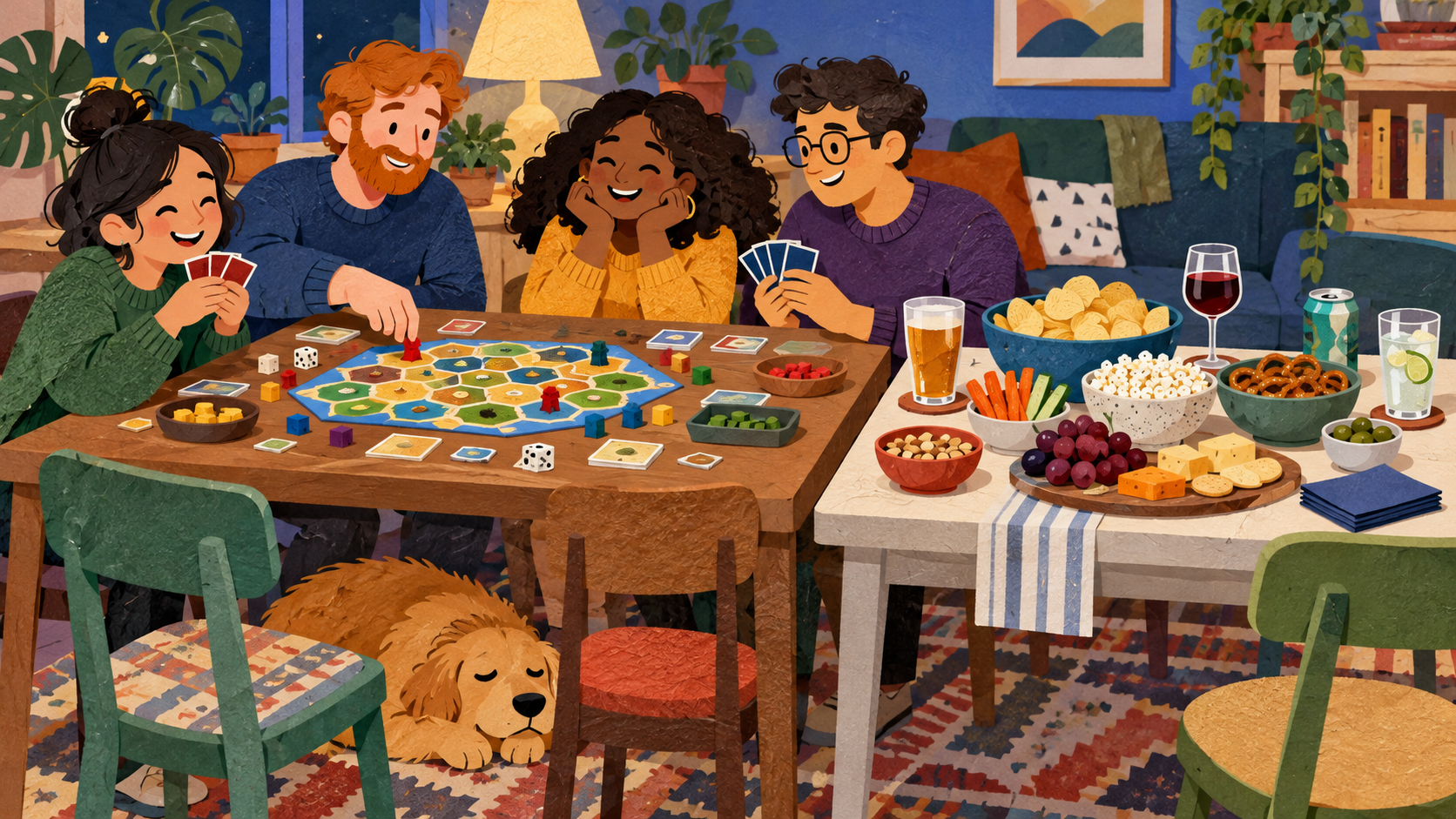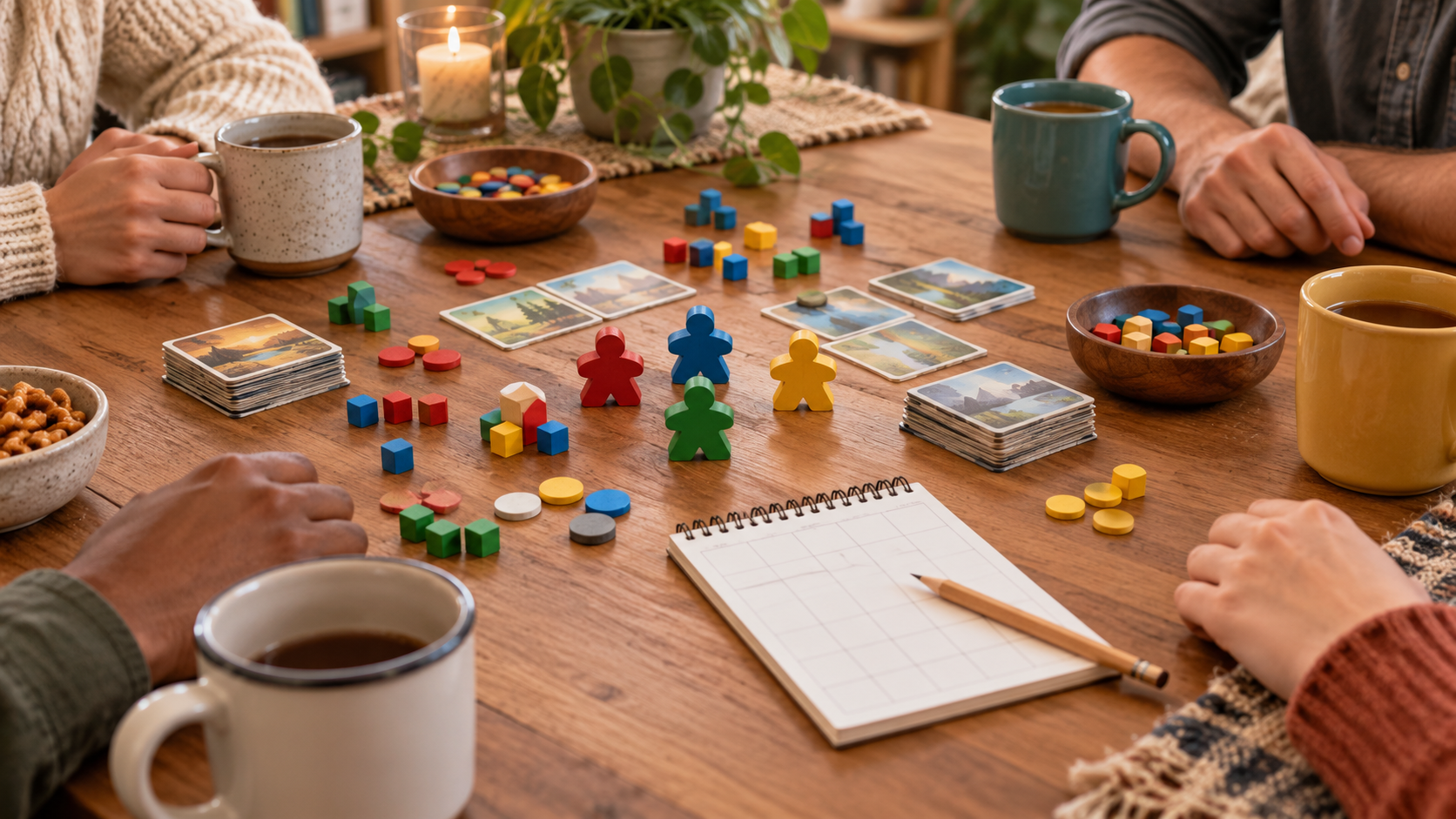
At minute seventeen of the explanation, someone looked at the snack bowl with the expression of a person reconsidering several life choices. I was still teaching the game. Technically. Socially, I had begun a small hostage situation involving wooden tokens.
The game was supposed to produce a pleasant afternoon. Instead, I was attempting to transfer every rule into six brains before allowing those brains to do anything. I had mistaken thoroughness for hospitality.
This is an embarrassing mistake for someone who works around events, where making people comfortable is usually more useful than demonstrating that the organizer knows everything.
Give the room a reason to care
I now begin with the goal of the game and a short description of the shape of a turn. What are we trying to achieve? What will I do when it is my turn? How does the evening move from one decision to the next? The answers give later details somewhere to attach.
Then I show a small example. A token moves. A card is chosen. Something changes. People can point at what they do not understand instead of storing a long abstract explanation and hoping it will make sense later.
This does not mean hiding an important rule until it punishes someone. I identify the decisions that matter before they are made and explain the consequences plainly. The aim is a useful sequence, not a surprise examination.
A practice turn can help, provided I say clearly that it is practice. If the first round will count, people deserve to know that too. An organizer's private assumption is a terrible place to store information the whole table needs.
Read the people as well as the rulebook
I watch for questions, confusion and fatigue. Silence is not proof of understanding. Someone may be reluctant to interrupt an explanation that has already achieved the length of a small documentary. I make space to ask, then respond without turning the question into evidence that the listener has failed.
If a player forgets a detail, I try to state the detail in the context of the decision in front of them. Reciting the entire earlier explanation with extra emphasis is an efficient way to make a table feel unwelcome.
Some groups enjoy a complicated teach. Some want a quick game between conversations. I ask what sort of gathering people expected and choose accordingly. A game I am excited about can still be the wrong choice for the people and time available.
The rules matter. I read them in advance, prepare what I can and keep the reference nearby. Knowing the game well should make the explanation easier to follow. It should not become an excuse to narrate every possible edge case before anyone has touched a piece.
I also leave room for the social purpose of the table. People need a drink, a place for their coat and a little time to greet someone they have not met. Those details are not distractions from the game night. They are part of the game night.
At the next gathering, the explanation was shorter and the first round slightly messier. People asked more questions. They also laughed, made decisions and wanted another round. That was a rather convincing improvement.
Nobody awards me points for the length of a rules speech. I have checked. Even the wooden tokens seem relieved.
A thought worth keeping?