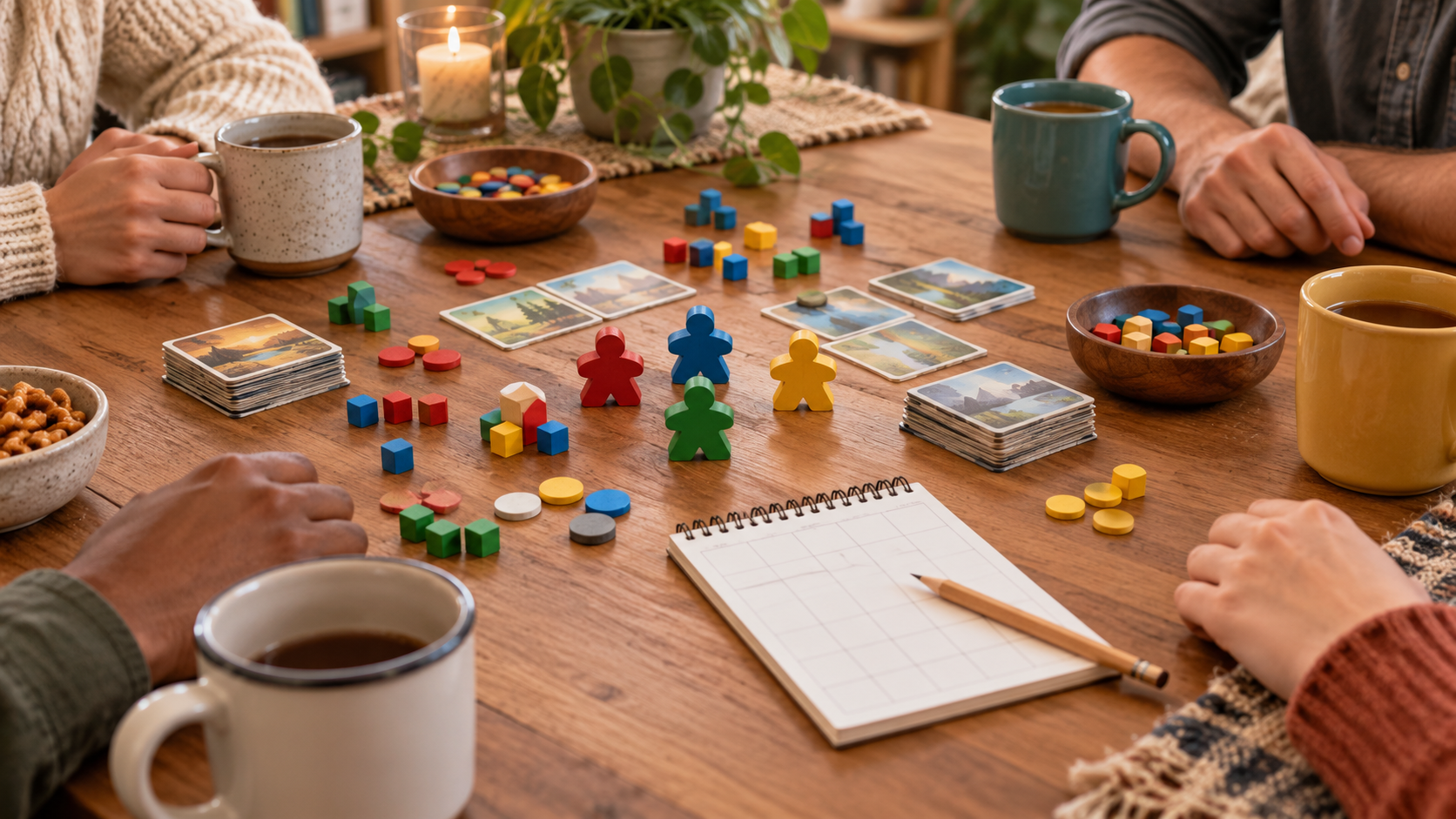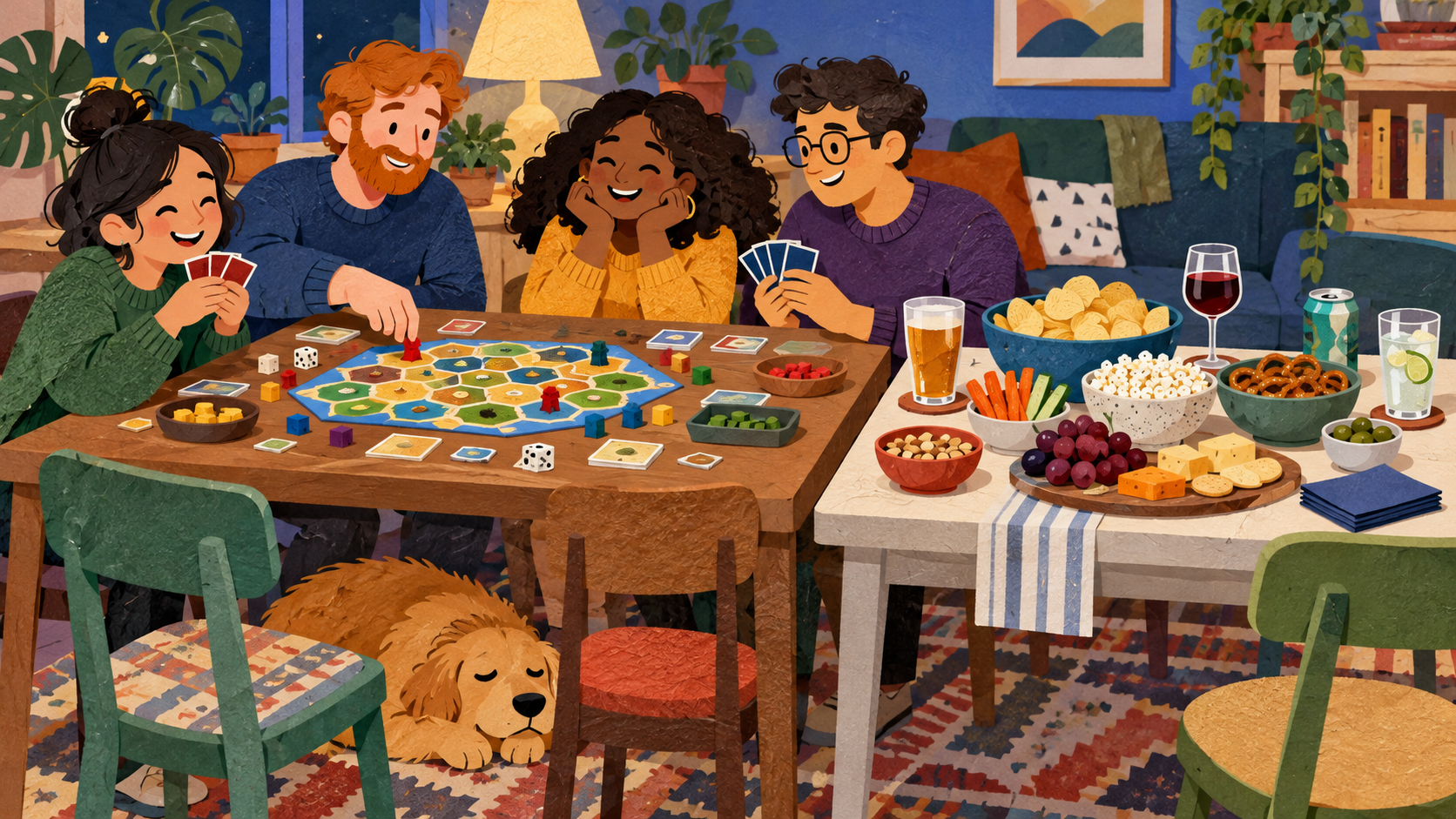
The snack bowl lived beside the most crowded part of the board. Every attempt to reach a biscuit required negotiating around tokens, drinks and someone's elbow. We had arranged a fun activity around a recurring minor irritation.
A second table changed the evening more than a new game would have.
The snacks and spare drinks moved there. People could stand, stretch and choose something without performing a careful reach over everybody else's decisions. The main table gained enough room for the pieces to remain visible and the players to keep a comfortable space in front of them.
The change also made natural pauses easier. Someone stepped away between rounds, another person joined them and a short conversation happened without requiring the game to keep pretending it had everyone's complete attention.
I began looking at the gathering as an arrangement of activities rather than a board surrounded by incidental humans. Where do coats go? Can people see? Is there an easy place to put a drink? Does the newest guest know where things are without needing to ask for every small practical detail?
None of this requires an enormous room. Sometimes the second table is a cleared counter or a safe nearby surface. The useful question is whether the ordinary movements of the evening have somewhere to happen.
The games stayed the same. The people stayed the same. The biscuits acquired a less dramatic journey to their destination.
Our table now looks slightly less packed in photographs. It feels considerably better to sit around, which is the audience I have decided to prioritize.
A thought worth keeping?